AI systems are entering a new phase of capability and autonomy. Since 2023, autonomous AI agents have evolved from experimental novelties to indispensable collaborators. While most people might just be getting used to using agents, these tools actually already make 15% of daily work decisions in enterprises. Agentic tools like GitHub Copilot helped drive the company’s revenue to a $2 billion annual run rate, 40% of which stems from its AI coding assistant. By 2028, an estimated 33% of enterprise software will embed agentic AI capable of planning, acting, and optimizing workflows with minimal human oversight, while 77K organizations, including FedEx, EY, and Goldman Sachs, have already deployed AI agents to automate tasks ranging from code generation to customer service.
This adoption signals a fundamental shift: AI is no longer a tool but a partner, redefining how businesses operate, innovate, and scale.
Agentic AI refers to advanced artificial intelligence systems capable of making decisions and performing tasks autonomously. Unlike traditional AI models that require specific inputs to generate outputs, agentic AI systems can perceive their environment, set goals, and act upon them, adapting to new situations as they arise. In 2025, systems are currently automating 80% of routine customer service interactions and enabling “zero-person” workflows where AI handles core business functions. This autonomy allows them to handle complex, multi-step problems, making them invaluable across various industries. Enterprise spending on generative AI surged 6x to $13.8 billion in 2024, with 96% of IT leaders planning to expand agentic AI use within a year.
AI agents have already automated over 100 million hours of work, equating to approximately $5 billion in labor value, and the boundary between human and machine creativity will continue to blur, ushering in a new era of partnership-driven innovation.
The Evolution of AI Interfaces
From Command Lines to Assistive Tools
The journey of human-computer interaction began with command-line interfaces in the mid-20th century, where users communicated with computers through text-based commands. For decades, interfaces remained static, requiring explicit commands through menus or programming languages. However, graphical user interfaces (GUIs) in the 1980s were popularized by systems like Apple's Macintosh and revolutionized this interaction by allowing users to engage with visual elements like icons and windows.
The 1990s and early 2000s saw the emergence of intelligent user interfaces, which integrated elements of artificial intelligence to enhance user interaction. Early examples include recommendation systems like Amazon’s item-to-item collaborative filtering released in 2003, which analyzed 250 million user interactions monthly to predict preferences, and Netflix’s Cinematch launched in 2000, which reduced churn by 25% by personalizing content suggestions.
The 2010s marked significant advancements in natural language processing, leading to the development of conversational agents like Apple’s Siri, Amazon's Alexa, Google Assistant, and advanced chatbots. Siri processed 1 billion monthly queries by 2015 and Alex reached 100 million smart home integrations by 2023. These tools could understand and process human language, enabling users to interact with devices through voice commands and receive real-time responses. This shift made technology more intuitive and integrated into daily life.
Emergence of Copilot Systems
However, the true inflection point came when ChatGPT was released in 2022 and processed 10 million daily queries within the first week of launch. These copilot chatbots enabled natural language interactions for tasks like drafting emails or debugging code. GitHub Copilot, launched in 2021, powers 40% of code in active repositories and reduces developer onboarding time by 55% as of 2025. Meanwhile, Microsoft 365 Copilot boosts meeting note accuracy through real-time transcription, and Relevance AI enables non-technical teams to build custom workflow agents.
Rise of Autonomous Agents
Since 2024, there has been a steady rise of agentic AI interfaces, characterized by systems capable of autonomous decision-making and action execution without explicit human instructions. Microsoft Autogen orchestrates multi-agent teams where a “supervisor” agent delegates tasks to specialized sub-agents, resolving IT tickets 4x faster than human teams. Opera's reimagined Neon browser integrates agentic AI to perform complex web-based tasks, such as building websites and booking travel, based on user intent. On the technical aspect, systems like Devin are becoming full-fledged AI software engineers that can handle the entire development process. So far in 2025, enterprises using agentic AI saw 30% reductions in operational costs and 50% faster decision cycles.
These rapid developments signify a paradigm shift in human-computer interaction, moving from reactive systems to proactive, autonomous agents that can collaborate with humans, enhancing productivity and innovation across various sectors.
Anatomy of Agentic Interfaces
Agentic AI systems are distinguished by their ability to operate autonomously, adapt to dynamic environments, and collaborate with other agents or humans to achieve complex goals. To understand their architecture, you can dissect its core components and the design patterns that enable its advanced behaviors.
Core Components
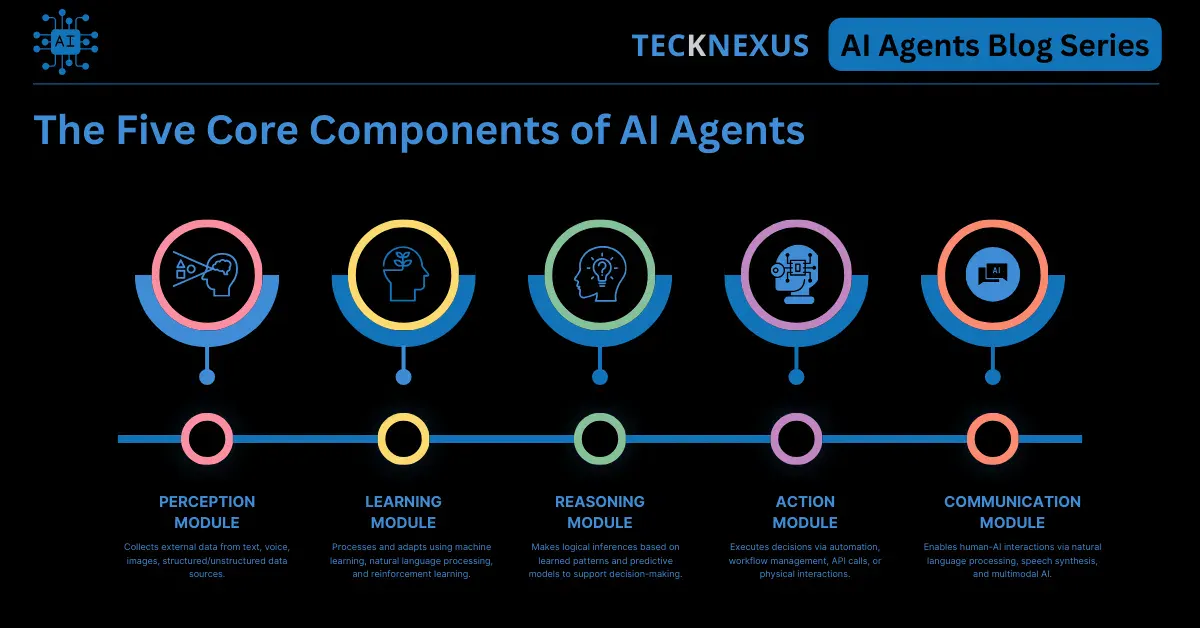
Source: TeckNexus
Agentic systems begin with perception by ingesting multi-modal data (text, images, sensor inputs, API streams, etc.) to construct a real-time understanding of their environment. This perception allows agents to understand context, identify relevant information, and detect changes in their surroundings. For instance, IBM’s agentic systems use computer vision to analyze warehouse footage, identifying inventory discrepancies with 94% accuracy. In autonomous vehicles, sensors provide real-time data about road conditions, which the AI interprets to make driving decisions. Moreover, perception isn’t passive: Amazon’s Alexa+ dynamically prioritizes inputs, filtering background noise during voice interactions while monitoring smart home sensor data.
Once data is perceived, agents employ reasoning mechanisms to make decisions. Agentic reasoning combines retrieval-augmented generation (RAG), heuristics, and probabilistic models to navigate ambiguity, evaluate possible actions, predict outcomes, and select the most appropriate course based on predefined goals or learned experiences. IBM’s financial fraud detection agents weigh transaction patterns, user history, and market trends, reducing false positives by 37% compared to rule-based systems. OpenAI’s o1 models employ “ReAct” (Reason + Act) frameworks, iterating through hypotheses before committing to actions, which places it in the uppermost percentile in task success rates.
After deciding on a course of action, agents execute tasks through interfaces or actuators. In software applications, this might involve sending API requests, modifying databases, or interacting with user interfaces. The ability to act upon decisions is crucial for agents to create change and achieve objectives. Microsoft Autogen resolves IT tickets by querying ServiceNow, editing Jira tasks, and emailing stakeholders, all within a single workflow. Agents can also impact physical devices. Tesla’s Optimus robots use reinforcement learning to adjust grip strength when manipulating fragile objects, achieving 99.2% task completion in factory trials.
Finally, unlike static models, agentic AI systems are designed to learn from their experiences. By analyzing the outcomes of their actions, agents can adjust their strategies, improve performance, and adapt to new scenarios. For example, Devin, an AI software engineer, improves code quality by 22% monthly through iterative feedback.
Design Patterns
Source: Towards AI
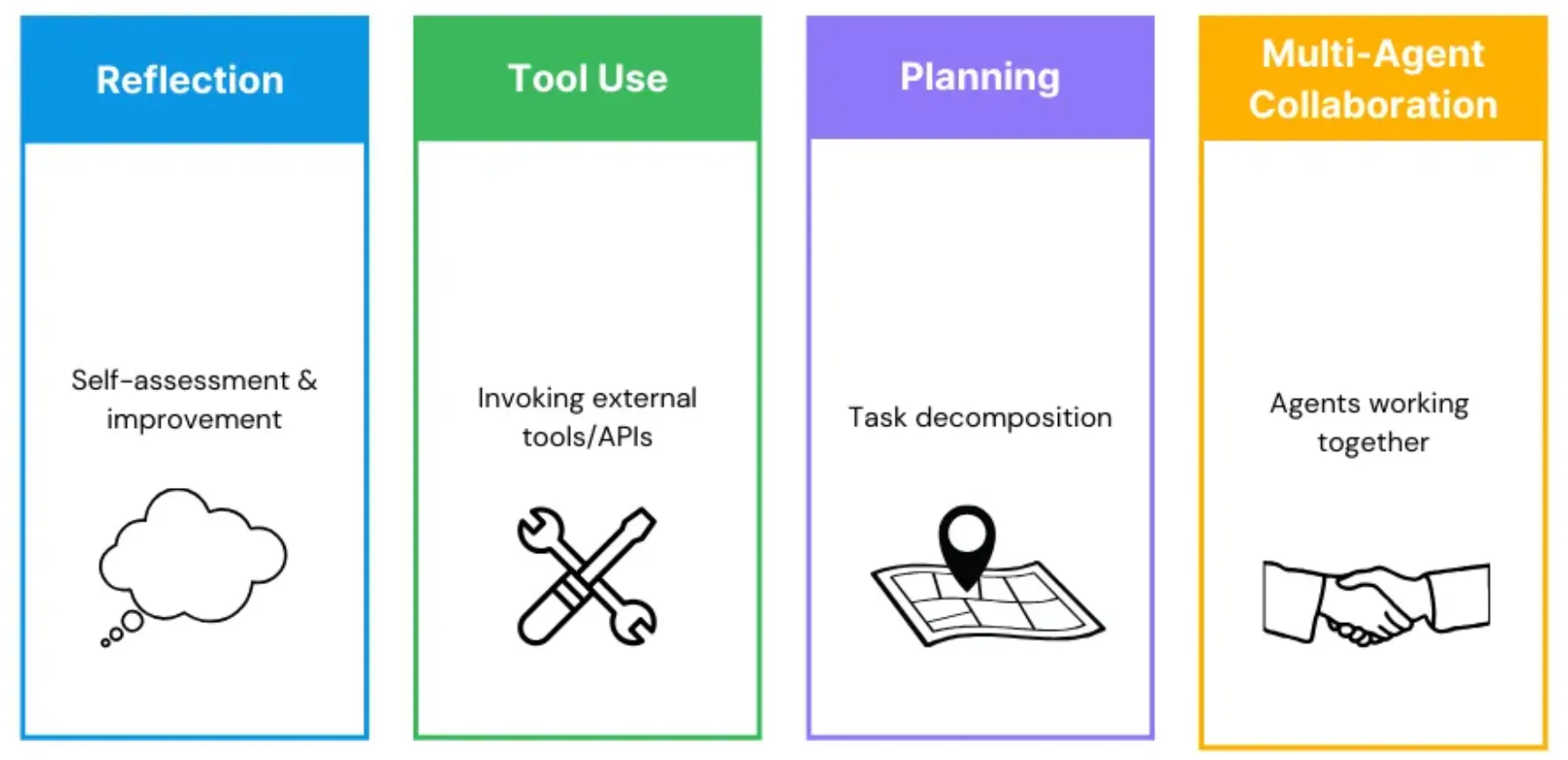
AI agent design patterns are frameworks that guide the development of intelligent systems capable of autonomous action. These patterns leverage the core components listed above to enable AI agents to reason, plan, and act effectively in a variety of tasks.
Reflection involves agents assessing their own actions and outcomes to identify errors or areas for improvement. By iteratively evaluating their performance, agents can refine their strategies and enhance decision-making. This self-assessment is equivalent to a feedback loop which promotes continuous improvement within the agent.
Agents extend their capabilities by utilizing external tools or resources. This can include accessing databases, invoking external APIs, or leveraging other software utilities to perform tasks beyond their inherent functions. Tool use enables agents to handle a broader range of tasks and adapt to various requirements. For instance, Samsung’s SmartThings agents adjust thermostats and lighting based on occupancy sensors and weather APIs.
Planning allows agents to sequence actions strategically to achieve long-term goals. By anticipating future states and organizing steps accordingly, agents can handle complex tasks that require foresight and coordination. Effective planning is vital for tasks that involve multiple stages or dependencies.
In scenarios where tasks are too complex for a single agent, multiple agents collaborate, with each specializing in different functions. This collaboration can involve communication, delegation, and synchronization among agents to achieve a common objective. Multi-agent systems are particularly useful in environments that require diverse expertise or parallel processing.
Real-World Applications & Case Studies
AI agents are increasingly being deployed to streamline and automate complex workflows, enhancing efficiency and reducing operational costs. JPMorgan Chase has integrated AI across its operations, investing $18 billion in technology in 2025 alone. The bank has developed over 100 AI tools, leading to a nearly 30% reduction in servicing costs and a projected 10% decrease in operational headcount. ServiceNow has introduced AI-driven initiatives, including partnerships with AWS and Microsoft, to enhance its Workflow Data Network. These collaborations aim to unify enterprise data and expand AI-driven actions, leading to more efficient and autonomous IT operations.
In addition, Parloa’s voice-first agents handle 80% of routine inquiries for Fortune 200 companies, using multi-layered authentication and dynamic intent recognition to resolve issues without human intervention. The platform reduced average handle times by 33% while increasing upsell conversion rates by 18%. These systems no longer merely assist; they own processes and iterate on performance metrics to optimize outcomes.
The software development lifecycle is also being redefined by AI agents capable of coding, debugging, and managing projects autonomously. Devin AI, developed by Cognition, is recognized as the world's first fully autonomous AI software engineer. It can plan, code, debug, and learn from online resources to complete tasks. In benchmark tests, Devin fixed 13.9% of encountered issues without human assistance, outperforming other models. In addition, Microsoft’s AI agents are automating development cycles and, in one case, clients are seeing 40% time savings for business analysts needing to write user stories and a 60% time savings in designing test cases for quality assurance.
Finally, beyond specific tasks, AI agents are now orchestrating entire business functions, effectively acting as digital managers. Retool has launched AI agents designed to autonomously complete tasks by planning and troubleshooting. These agents are utilized for various functions, including processing customer refunds and conducting performance analyses, effectively replacing certain middle management roles. Coworker.ai’s OM1-powered agent manages more than 25 enterprise tools (Jira, Salesforce, GitHub) and tracks over 120 business parameters to autonomously onboard employees, allocate budgets, and coordinate product launches. In the healthcare AI space, Grove AI has developed AI agents to assist in enrolling clinical trial participants and ensuring proper post-hospitalization care.
The Future Landscape
As agentic AI continues to evolve, its integration into various sectors is poised to redefine organizational structures, workflows, and human-AI collaboration. By 2030, 50% of cross-functional supply chain solutions will deploy agentic AI to autonomously execute decisions, while 68% of customer service interactions will be agent-led by 2028.
The next wave will prioritize small, task-specific models over general-purpose LLMs. By 2027, enterprises will use specialized AI models three times more than broad LLMs, as they offer 45% higher accuracy in domain-specific tasks like medical diagnostics or fraud detection. These models will operate within multi-agent ecosystems. For instance, Salesforce’s Agent Force already coordinates multiple agents per workflow, reducing IT ticket resolution times by 73%.
Source: XenonStack
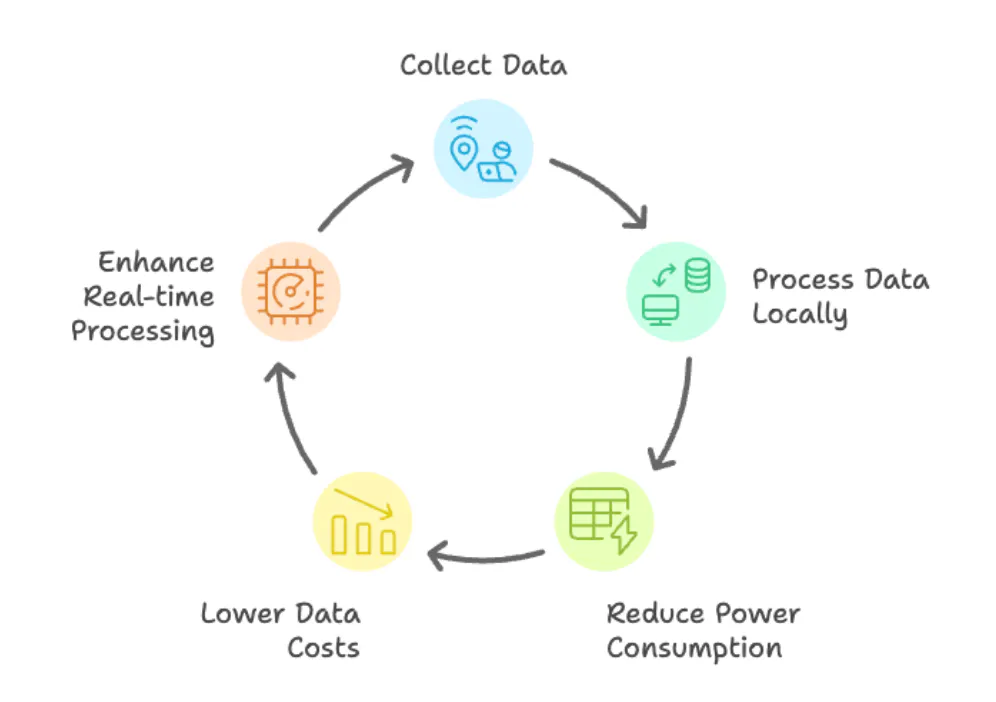
Moreover, edge computing will merge with agentic AI to enable real-time decision-making in physical environments. Amazon’s Alexa+ prototype processes sensor data from more than 50 IoT devices to adjust smart home settings autonomously, and Tesla’s Optimus robots use on-device AI to manipulate objects with 99% precision in factory trials.
Despite the promising advancements, the rise of agentic AI presents challenges that organizations must address. The automation capabilities of AI agents may impact over 800 million workers across all industries. Moreover, as AI agents gain more autonomy, ensuring their reliability and security becomes even more important. Robust frameworks are needed to mitigate risks associated with autonomous AI agents.
The rising prevalence and adoption of protocols like the Model Context Protocol aim to standardize how AI models integrate and share data with external tools. This provides technical and security benefits, as it facilitates seamless interaction between AI agents and various systems.
Dreaming The Agentic Dream
The evolution of AI agents from simple rule-based assistants to autonomous collaborators marks a significant milestone in the field of artificial intelligence. Initially designed to perform specific, predefined tasks, AI agents have transformed into advanced systems capable of perceiving their environment, making independent decisions, and executing complex workflows without human intervention. The space has been able to advance as a result of progress in machine learning, natural language processing, and reinforcement learning, enabling AI agents to adapt and learn from their experiences.
In a broad swath of industries, AI agents are now integral to operations where they automate processes, enhance efficiency, and drive innovation. And it’s just getting started! However, the increasing autonomy of AI agents brings forth critical considerations regarding ethics, transparency, and accountability. Ensuring that AI agents operate within ethical boundaries requires robust governance frameworks, continuous monitoring, and clear delineation of responsibilities. Organizations must prioritize fairness, explainability, and human oversight to maintain trust and prevent unintended consequences.
As we continue to integrate AI agents into our daily lives and business operations, it is imperative to strike a balance between leveraging their capabilities and upholding ethical standards. By fostering collaboration between humans and AI agents, we can harness the full potential of this technology while ensuring that it serves the broader interests of society.